

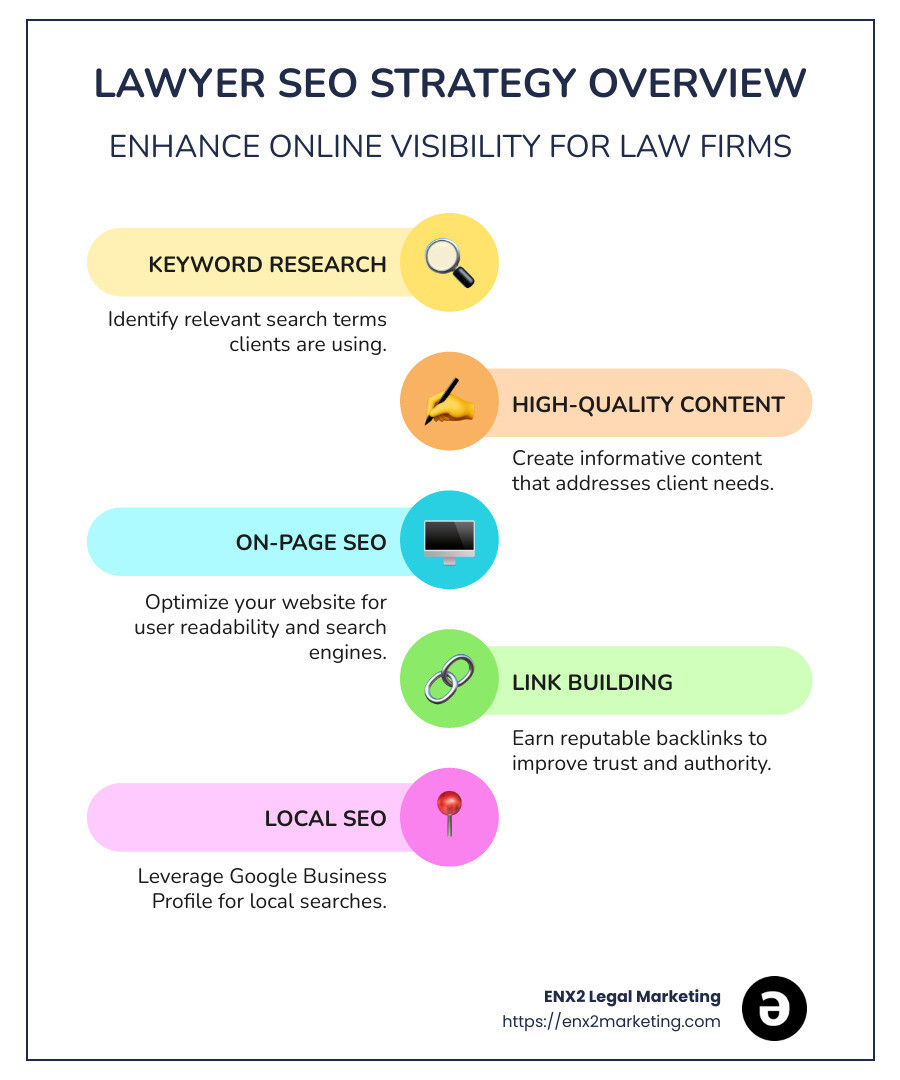
Law Firm SEO Marketing: A Practical Guide to Growing Your Online Presence
Law Firm SEO Marketing: A Practical Guide to Growing Your Online Presence
When people need legal advice, many begin their search online. They may look for a solicitor in their area, compare services or search for answers to a specific legal question. If a law firm is difficult to find in search results, potential clients may choose a competitor instead.
Law firm SEO marketing helps improve a firm’s visibility in search engines and makes its website more useful to prospective clients. A strong approach combines technical improvements, relevant content, local visibility and a trustworthy user experience. It is not a quick fix, but consistent work can help a firm attract more relevant enquiries over time.
What is SEO for law firms?
Search engine optimisation (SEO) is the process of improving a website so that it is easier for search engines and users to understand. For a law firm, this means helping the right people find the right information when they search for legal services.
SEO can support searches such as “family solicitor in Bristol”, “employment law advice for employers” or “what happens after a conveyancing offer is accepted?”. The aim is not simply to bring more visitors to a website. It is to attract people whose needs match the firm’s services and location.
Why SEO matters to law firms
Legal services are often high-consideration purchases. People may compare several firms before making contact, particularly when the issue is complex or personal. A clear, informative website can help build confidence before the first conversation.
Effective law firm SEO marketing can help a firm:
- Appear more prominently for relevant legal searches.
- Reach people looking for services in the areas the firm serves.
- Answer common questions and demonstrate subject knowledge.
- Build trust through accurate, accessible information.
- Generate a steadier source of enquiries over time.
Start with the right keyword strategy
Keyword research helps identify the words and questions people use when searching for legal help. It should reflect the firm’s actual services, expertise and locations—not just high-volume phrases that are unlikely to lead to suitable enquiries.
Useful keyword groups may include:
- Service searches: such as “commercial property solicitor” or “divorce lawyer”.
- Location searches: such as “solicitor in Leeds” or “conveyancing solicitors near me”.
- Question-based searches: such as “how is a will challenged?” or “what are my rights during redundancy?”.
- Audience-specific searches: such as legal advice for landlords, start-ups or charities.
Each important service should have a clear, dedicated page. Trying to cover every area of law on one page can make it harder for visitors and search engines to understand what the firm offers.
Create useful, trustworthy legal content
Content is a central part of SEO for law firms, but publishing frequently is not enough. Articles and service pages should answer real questions, explain legal concepts in plain English and help readers understand what to do next.
Useful content might include service guides, answers to frequently asked questions, explainers on changes in the law and practical information about a firm’s process. Content should be reviewed regularly, especially where legislation, case law or official guidance may have changed.
Accuracy matters. Legal content should be checked by an appropriately qualified person, and the page should make clear when information is general rather than advice on an individual matter. Avoid promises about outcomes or claims that could give readers an unrealistic impression of what a firm can achieve.
Build local visibility
For firms serving particular towns, cities or regions, local SEO can be especially important. Search engines use information about a business’s location and services to help respond to local searches.
To strengthen local visibility:
- Keep the firm’s name, address and telephone number consistent across its website and relevant directories.
- Maintain an up-to-date business profile on Google, including accurate opening hours and service information.
- Create useful location pages where the firm genuinely serves those areas.
- Ask clients for honest reviews and respond to feedback professionally.
- Make contact details and directions easy to find on the website.
Location pages should provide genuine value. Simply replacing a town name across multiple near-identical pages can create a poor experience and may not help the firm’s search performance.
Make the website technically sound
A website needs to work well before its content can perform at its best. Technical SEO includes the behind-the-scenes elements that help search engines access and understand the site, as well as features that affect the visitor experience.
Key areas to review include:
- Mobile usability, as many people search on a phone.
- Page speed and reliable hosting.
- Secure browsing through HTTPS.
- Clear navigation and logical page structure.
- Descriptive page titles and headings.
- Accessible design, including readable text and meaningful image descriptions.
- Working forms, telephone links and other contact options.
A technically sound website should make it easy for both visitors and search engines to find important information. It should also make the next step—such as calling the firm or submitting an enquiry—straightforward.
Demonstrate credibility and experience
People choosing legal representation need confidence in the firm. A well-designed website can support that confidence by providing clear information about the people, services and standards behind the business.
Consider including solicitor biographies, relevant qualifications, areas of practice, office details and clear explanations of how the firm works. Keep this information current. Any testimonials, accreditations or claims about experience should be accurate and presented in a way that does not mislead.
Law firms should also pay close attention to the rules and professional requirements that apply to their jurisdiction. For firms regulated in England and Wales, marketing should be honest and not misleading, and advertising must comply with applicable professional and regulatory requirements. Firms should check current guidance before publishing claims or client information.
Measure what is working
SEO results should be assessed using more than rankings alone. A page may attract visitors but fail to generate useful enquiries, while another may bring fewer visitors who are a much better fit for the firm.
Useful measures include organic traffic, visibility for relevant searches, enquiries from organic search, calls or form submissions, and engagement with key service pages. Analytics and search performance tools can help identify which content is performing well and where improvements may be needed. Ensure any tracking is configured in line with applicable privacy and data protection requirements.
Common law firm SEO mistakes
Some common problems can limit the value of an SEO campaign:
- Targeting broad keywords without considering client intent.
- Using duplicate or thin content across service and location pages.
- Publishing legal information without checking its accuracy or freshness.
- Focusing on rankings while ignoring the quality of enquiries.
- Making unsupported claims or promising specific legal outcomes.
- Neglecting mobile usability, accessibility or website security.
- Expecting immediate results from a long-term marketing channel.
How long does law firm SEO take?
SEO is a gradual process. The time needed to see meaningful progress depends on factors such as the firm’s location, competition, website condition, content quality and the effort invested. Some improvements may have an impact relatively quickly, while building stronger visibility for competitive searches can take considerably longer.
A sustainable strategy focuses on ongoing improvements rather than shortcuts. Regularly reviewing performance, updating important pages and publishing genuinely useful information can help maintain momentum.
Building a sustainable SEO strategy
Successful law firm SEO marketing brings together a clear understanding of prospective clients, accurate legal content, a well-structured website and consistent local information. It should support the firm’s wider business goals while giving people a helpful and honest experience online.
By focusing on relevant searches, trustworthy information and measurable outcomes, a law firm can improve its chances of being found by people who need its services—and make it easier for them to take the next step.
9 Practical SEO Marketing Tips for UK Law Firms
- Target local legal search terms and service areas.
- Create clear pages for each practice area.
- Use UK spelling and plain, client-focused language.
- Keep solicitor profiles accurate and up to date.
- Add genuine client reviews where permitted.
- Optimise page titles and descriptions for search.
- Make the website fast and mobile-friendly.
- Publish helpful legal guides with reviewed information.
- Track enquiries, rankings and website traffic regularly.
Target local legal search terms and service areas.
Targeting local legal search terms helps your firm reach people looking for support in the areas you serve. Include relevant locations alongside your legal services—for example, “family solicitor in Bristol”—in suitable service pages, page titles and website content. Create location pages only where they offer genuinely useful information, and keep your address, contact details and business listings accurate and consistent. This helps prospective clients understand where you work and can improve your visibility in relevant local searches.
Create clear pages for each practice area.
Create a clear, dedicated page for each practice area your firm offers, such as family law, conveyancing or employment law. This helps visitors quickly find relevant information and gives search engines a better understanding of your services. Explain who you help, the issues you handle, where you operate and what clients can expect when they contact you. Use straightforward language, include useful answers to common questions and provide a clear next step, such as calling your team or submitting an enquiry. Ensure each page contains original, accurate information rather than repeating the same copy across multiple services.
Use UK spelling and plain, client-focused language.
Use UK spelling and plain, client-focused language across your website. Write as people speak, explain legal terms where needed and focus on the questions potential clients are likely to ask. Clear, helpful content is easier to understand and can make your firm feel more approachable, while also helping search engines match your pages with relevant searches.
Keep solicitor profiles accurate and up to date.
Keep solicitor profiles accurate and up to date so prospective clients can quickly understand each person’s expertise and experience. Include current job titles, practice areas, qualifications, professional memberships and relevant languages, and update the information when anything changes. Clear, factual profiles help build trust, support visitors in finding the right legal specialist and give search engines useful context about your firm. Avoid outdated details or claims that cannot be verified.
Add genuine client reviews where permitted.
Add genuine client reviews to your website and relevant business profiles where permitted by your professional and regulatory rules. Honest feedback can help prospective clients understand what it is like to work with your firm and build confidence in your services. Ask for reviews in a fair, consistent way, never pressure clients or offer incentives, and avoid editing comments in a way that changes their meaning. Check that any review or testimonial is used with appropriate consent and complies with applicable confidentiality, privacy and advertising requirements.
Optimise page titles and descriptions for search.
Optimise each page title and meta description to reflect the specific legal service, location or question covered on that page. Keep titles concise and distinctive, and write descriptions that clearly explain what visitors will find and why the page may be useful. Include relevant search terms naturally, without keyword stuffing, and make sure every description accurately represents the page. Well-written titles and descriptions can help search engines understand your content and encourage prospective clients to choose your firm in search results.
Make the website fast and mobile-friendly.
A fast, mobile-friendly website makes it easier for potential clients to find information and contact your firm, whether they are browsing at home or on the move. Pages that load slowly or are difficult to use on a phone can frustrate visitors and prompt them to leave, while also undermining your search visibility. Optimise images, keep layouts simple, use readable text and make key details—such as your telephone number, services and enquiry form—easy to access on smaller screens.
Publish helpful legal guides with reviewed information.
Publish helpful legal guides that answer the questions your prospective clients are actually asking, using clear, accessible language rather than unnecessary jargon. Cover relevant topics in enough detail to be genuinely useful, and have a suitably qualified legal professional review each guide for accuracy before it goes live. Review it regularly as laws, procedures and official guidance change, and include the publication or review date so readers can see that the information is current. This builds trust with visitors and can help your firm appear in search results for relevant legal queries.
Track enquiries, rankings and website traffic regularly.
Track enquiries, search rankings and website traffic regularly to understand whether your law firm’s SEO is reaching the right people. Look beyond visitor numbers: monitor which pages and search terms lead to calls or form submissions, and assess whether those enquiries match the services your firm offers. Reviewing the data over time can show what is working, highlight pages that need improvement and help guide future marketing decisions.