

PPC Search Engine Internet Marketing: A Practical Guide
PPC Search Engine Internet Marketing: A Practical Guide
When people search online for a product, service or solution, they often turn to a search engine. Pay-per-click (PPC) search engine marketing helps businesses appear prominently in those results by placing paid adverts alongside relevant searches. It can be a useful way to reach potential customers who are actively looking for what a business offers.
What is PPC search engine marketing?
PPC is a form of online advertising in which an advertiser usually pays when someone clicks on an advert. On search engines such as Google and Microsoft Bing, adverts can appear above or below the organic search results. Their position and visibility depend on factors such as the advertiser’s bid, the relevance of the advert and the quality of the landing page.
PPC is sometimes called paid search or search engine advertising. It is part of search engine marketing (SEM), a broader term often used for activities that promote a website through search engines. Unlike search engine optimisation (SEO), which aims to improve unpaid rankings over time, PPC can provide visibility as soon as a campaign is approved and running.
How does a PPC campaign work?
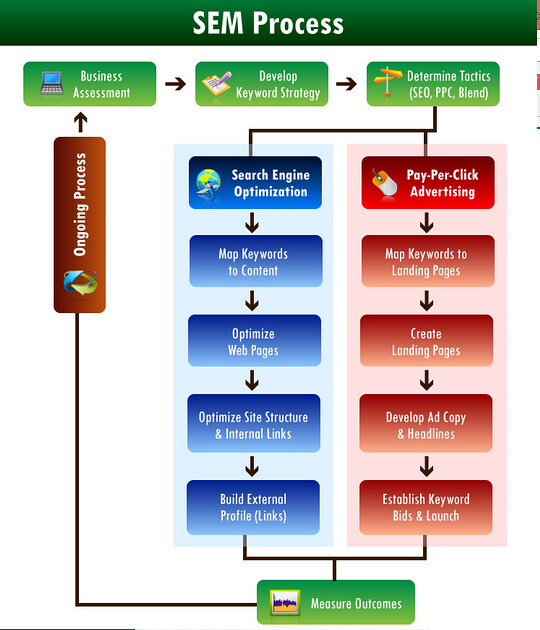
A search campaign starts with choosing the searches, or keywords, that should trigger an advert. An advertiser then creates adverts and selects the pages visitors will reach after clicking. The campaign can also be set up with a budget, location settings, schedules and other controls.
Search engines run an auction when someone enters a query. Advertisers may compete for the opportunity to show an advert, but the highest bid does not automatically guarantee the top position. Search engines also consider how closely the advert matches the search and whether the landing page is useful and relevant.
Advertisers can choose from different keyword match types, which affect how closely a search must relate to a selected keyword before an advert may appear. Negative keywords can be added to help prevent adverts showing for unsuitable searches. Careful campaign set-up helps reduce irrelevant clicks and make better use of the advertising budget.
Why use PPC?
- Reach people with clear intent: Search adverts can connect a business with people actively looking for a relevant service.
- Control spending: Campaigns can be given daily or overall budgets, and bids can be adjusted as performance becomes clearer.
- Target specific audiences: Advertisers can tailor campaigns by location, device, schedule and other available settings.
- Measure activity: Clicks, calls, form submissions and other actions can be tracked when measurement is configured correctly.
- Test and refine: Different advert messages, keywords and landing pages can be compared to find what works best.
What makes a PPC campaign effective?
Relevant keyword research
Keyword research helps identify the words and phrases potential customers use. It should consider search intent as well as search volume. Someone searching for general information may not be ready to enquire, while a more specific search may indicate an immediate need. A well-planned campaign accounts for these differences.
Clear, useful adverts
An advert should reflect the search that triggered it and make the next step clear. Strong messaging explains what is offered and why it may be relevant, without making claims that cannot be supported. Calls to action such as “Request a consultation” or “Find out more” can guide visitors, provided they accurately describe what happens next.
Landing pages that deliver
After clicking an advert, visitors should arrive on a page that matches their expectations. The page should load reliably, work well on mobile devices and make key information easy to find. A clear contact option and a straightforward enquiry process can help visitors take the next step.
Accurate conversion tracking
Clicks alone do not show whether a campaign is producing useful results. Conversion tracking can measure actions such as calls, bookings or completed forms. Tracking should be checked regularly so that decisions are based on dependable data and privacy requirements are respected.
Common PPC mistakes to avoid
- Choosing broad or poorly researched keywords that attract irrelevant traffic.
- Sending every visitor to the home page rather than to a relevant landing page.
- Setting a budget without considering the value of an enquiry or sale.
- Leaving campaigns unattended instead of reviewing search terms and performance.
- Making advertising claims that are unclear, misleading or difficult to substantiate.
- Failing to check that conversion tracking is working correctly.
PPC for law firms
For law firms, paid search can help promote specific services in selected locations. However, legal advertising needs particular care. Campaigns should use accurate, clear language and comply with applicable advertising rules and professional obligations. They should also avoid implying guaranteed outcomes or creating unrealistic expectations.
Legal keywords can be competitive, so firms should plan budgets carefully and assess the quality of enquiries as well as their volume. A campaign may generate clicks without producing suitable prospective clients if its keywords, adverts or landing pages are too broad. Regular review helps identify which searches are relevant and where spending may need to change.
How PPC and SEO work together
PPC and SEO serve different purposes, but they can support one another. PPC can provide immediate paid visibility and useful feedback about search terms, while SEO focuses on building visibility in organic results over time. Insights from one channel may help inform the other, though neither guarantees a particular level of traffic or business.
Measuring success
The right measures depend on a campaign’s objectives. Useful metrics may include the number and cost of clicks, the proportion of visitors who take a desired action, the cost per enquiry and the quality of leads. Businesses should look beyond headline figures and consider whether the campaign is contributing to meaningful outcomes.
Conclusion
PPC search engine internet marketing can give a business a targeted way to reach people searching for its services. Results depend on more than simply paying for clicks: keyword selection, advert relevance, landing-page quality and accurate measurement all matter. With careful planning and ongoing optimisation, PPC can form a valuable part of a broader digital marketing strategy.
7 Essential Tips for Effective PPC Search Engine Marketing
- Choose keywords that match buyer intent.
- Group related keywords into focused ad groups.
- Write clear ads with a strong call to action.
- Set a sensible daily budget and bid limit.
- Use negative keywords to cut irrelevant clicks.
- Optimise landing pages for relevance and speed.
- Track conversions and refine campaigns regularly.
Choose keywords that match buyer intent.
Choose keywords that match buyer intent by focusing on the terms people use when they are ready to take action, such as comparing providers, requesting a quote or booking a service. These searches may be more specific than general research queries and can attract visitors who are closer to making a decision. Group related keywords together, write adverts that reflect the search, and send visitors to a relevant landing page. Review search-term reports regularly and add negative keywords to reduce spend on irrelevant clicks.
Group related keywords into focused ad groups.
Group related keywords into focused ad groups so each set of adverts closely matches a particular search intent, product or service. This makes it easier to write relevant advert copy and direct users to the most appropriate landing page. For example, a law firm could separate searches for family law from those for employment law rather than placing them all in one broad ad group. More focused campaigns are also easier to review and refine, helping you identify which keywords and adverts are attracting useful enquiries.
Write clear ads with a strong call to action.
Write clear, relevant adverts that quickly explain what you offer and why it matches the search. Use a strong call to action, such as “Book a consultation” or “Get in touch today”, to show potential customers what to do next. Make sure the wording is accurate and that the page people land on delivers what the advert promises.
Set a sensible daily budget and bid limit.
Set a sensible daily budget and bid limit before launching a PPC campaign. Base them on what you can afford, the likely value of an enquiry or sale, and the competitiveness of your target keywords. A daily budget helps keep overall spending under control, while a bid limit can prevent you from paying more than intended for a click. Review performance regularly and adjust these limits using reliable conversion data, rather than increasing spend simply to attract more traffic.
Use negative keywords to cut irrelevant clicks.
Use negative keywords to stop your adverts appearing for searches that are not relevant to your business. For example, if you offer paid legal advice, adding terms such as “free” or “DIY” as negative keywords may help reduce clicks from people looking for something you do not provide. Review your search-term reports regularly to spot unwanted queries, refine your exclusions and make better use of your PPC budget.
Optimise landing pages for relevance and speed.
Optimise landing pages for both relevance and speed to make every PPC click count. The page should closely match the advert and search term, with clear information and a straightforward next step, so visitors can quickly find what they expected. It should also load quickly on mobile and desktop, as slow pages can frustrate potential customers and lead them to leave before taking action. Regularly test page speed, check how it works on different devices and refine its content to improve the visitor experience and campaign performance.
Track conversions and refine campaigns regularly.
Track conversions to understand which clicks lead to valuable actions, such as calls, enquiries or bookings—not just website visits. Review this data regularly alongside search terms, costs and advert performance, then refine your keywords, bids, adverts and landing pages. Ongoing adjustments can help reduce wasted spend and focus your PPC campaign on the searches and messages that deliver the strongest results.