

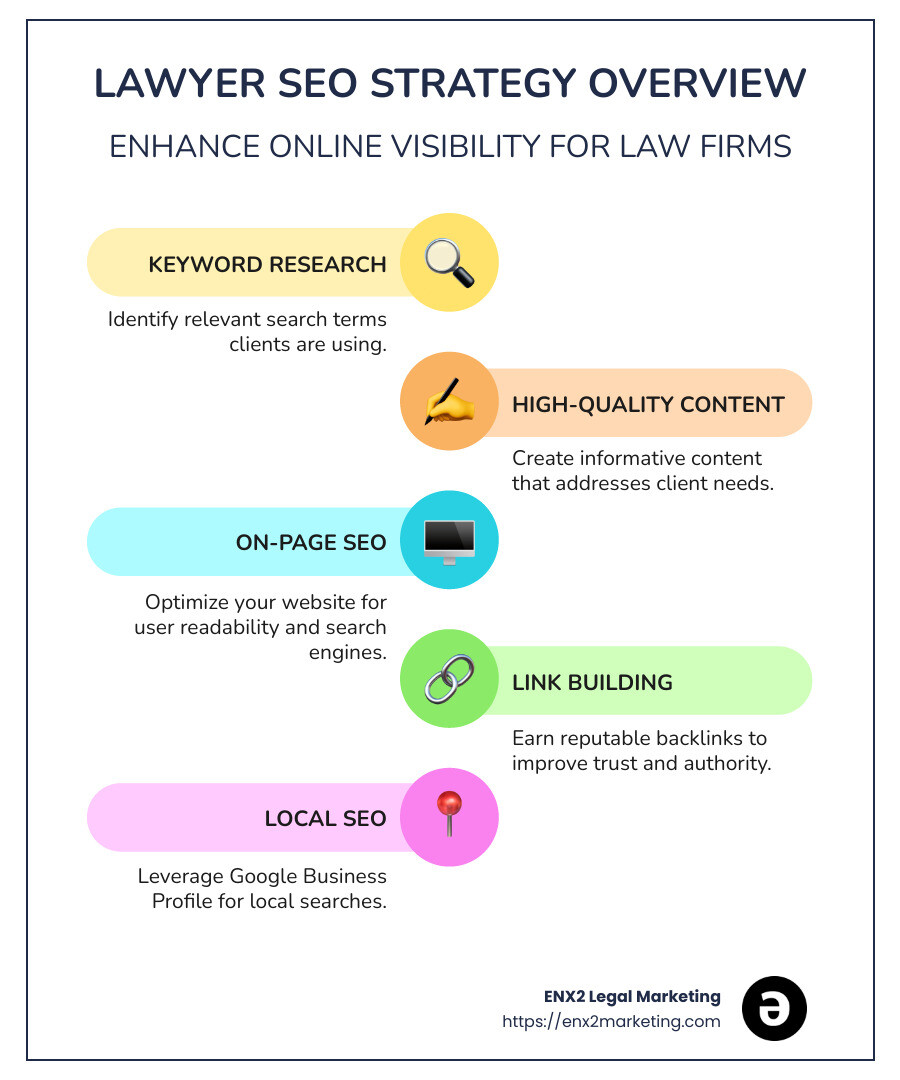
SEO for Legal Firms: A Practical Guide to Growing Your Online Visibility
SEO for Legal Firms: A Practical Guide to Getting Found Online
When someone needs legal advice, they often start with a search engine. They may be looking for a solicitor nearby, comparing firms or trying to understand a legal issue before making contact. Search engine optimisation (SEO) helps your firm appear in relevant search results and makes it easier for prospective clients to find and assess your services.
Effective SEO for legal firms is about more than adding keywords to a website. It combines useful information, a clear website experience, strong local visibility and trustworthy signals. This guide explains the main areas to focus on.
What is SEO for legal firms?
SEO is the process of improving a website so that search engines can understand its pages and people can find them through relevant searches. For a law firm, this could mean appearing when someone searches for a service such as “employment solicitor in Manchester” or looks for information about a legal process.
SEO can help your firm attract visitors who are actively looking for legal services. It is a long-term marketing channel, however, and results depend on factors such as your location, competition, website history and the quality of your work. No agency or SEO strategy can guarantee a particular ranking.
Understand what potential clients are searching for
Start by identifying the services and questions that matter to your firm and its prospective clients. Search terms might include:
- Specific legal services, such as conveyancing, family law or employment law
- Location-based searches, such as “family solicitor in Leeds”
- Questions about legal processes, costs, eligibility or timescales
- Searches comparing different types of legal support
Keyword research tools can help you discover search terms, but client conversations are valuable too. Note the questions people ask during initial enquiries and consultations. These can point to useful website content and reveal how clients describe their needs.
Choose keywords based on relevance, not search volume alone. A phrase with fewer searches may be more valuable if it closely matches a service your firm provides. Avoid targeting a location or specialism if your firm cannot genuinely serve clients there.
Create helpful, accurate legal content
Useful content can help potential clients understand their options and decide whether to contact your firm. It can also help search engines understand the subjects your website covers.
Consider creating clear service pages, answers to common questions, practical guides and updates on relevant legal changes. Each page should have a defined purpose and be written for the reader, not simply to include keywords.
Legal information requires particular care. Make sure content is accurate, up to date and clear about its scope. Explain technical terms where possible, include relevant dates and arrange for suitable legal professionals to review material that deals with legal rights or obligations. Where appropriate, state that general information is not a substitute for advice on an individual matter.
It is also helpful to identify the author or reviewer and explain their relevant experience. These details give readers useful context and support confidence in your information. Do not imply that a person has qualifications, experience or regulatory status they do not hold.
Build clear service pages
A service page should explain what your firm does and help the reader understand what to do next. A strong page will usually cover:
- The service and the people or organisations it is for
- The situations in which a client might need help
- How your firm can assist and what the process may involve
- Relevant experience and the professionals responsible for the service
- How to make an enquiry
Keep each page focused. A single page that tries to cover every service and location may be difficult for visitors and search engines to interpret. Equally, avoid creating large numbers of near-identical pages with only a town name changed. Pages should offer genuinely useful information for the people they are intended to serve.
Improve local SEO
Local SEO helps your firm appear in searches related to a particular area. It is especially important for firms that meet clients in person or serve defined locations.
Make sure your firm’s name, address and contact details are accurate and consistent across your website and relevant online directories. Set up and maintain a Google Business Profile, selecting appropriate categories and keeping opening hours, services and contact details up to date. Add clear, recent photographs where suitable.
Encourage clients to leave honest reviews, but do not pressure them or offer incentives in a way that could mislead. Respond professionally and protect confidential information: never disclose details about a client or their matter in a public reply.
Your website should make your service areas clear without making unsupported claims about having offices or teams in places where you do not operate. Genuine local relevance is more sustainable than trying to appear in every location.
Make the website easy to use
A visitor who cannot find the right information or contact details may leave before making an enquiry. Good website usability supports both the client experience and SEO.
Check that your website:
- Works well on mobile phones and tablets
- Loads promptly and displays correctly across common browsers
- Uses clear menus and descriptive page headings
- Has readable text, good colour contrast and accessible forms
- Makes contact options easy to find
- Uses secure HTTPS connections
Accessibility should be part of the design process, not an afterthought. Clear language, descriptive links, keyboard-friendly navigation and useful image descriptions can make the site easier for more people to use.
Pay attention to technical SEO
Technical SEO helps search engines crawl and understand your website. Important checks include making sure that key pages can be indexed, broken links are fixed and duplicate pages are managed appropriately. Page titles and meta descriptions should describe the content accurately and encourage relevant visitors to click.
An XML sitemap can help search engines discover important pages, while structured data may provide additional context about your organisation or content. Structured data does not guarantee enhanced search results, and it must accurately reflect information visible on the page.
Use tools such as Google Search Console to monitor indexing, search performance and technical issues. Analytics tools can help you understand how visitors use the site, subject to appropriate privacy and cookie practices.
Build credibility and authority
People choosing a legal firm need reasons to trust the information and the organisation behind it. Make it easy for visitors to check who you are, what you do and how to contact you.
Useful trust signals may include professional biographies, relevant qualifications, details of regulation where applicable, clear office and contact information, and transparent explanations of fees or the next steps. Publish content under named authors or reviewers where possible, and keep biographies accurate and current.
Links from relevant, reputable websites can also help people discover your firm and may contribute to your website’s authority. Focus on earning links through useful resources, community involvement, professional contributions and genuine relationships. Avoid buying links or using schemes designed to manipulate rankings.
Follow the rules for legal marketing
Marketing communications should be accurate, responsible and not misleading. Check that claims about your services, results, experience and expertise are supported by evidence. Be especially careful with promises or comparisons that could create unrealistic expectations.
Solicitors and firms regulated by the Solicitors Regulation Authority should follow the SRA’s requirements and guidance, including rules on publicity and referrals. Other legal professionals may be subject to different regulatory requirements. Check the rules that apply to your organisation and seek appropriate advice if you are unsure.
Measure progress and refine your approach
SEO performance should be reviewed regularly. Rankings can fluctuate, so consider a range of measures, including:
- Relevant organic visits to service and advice pages
- Enquiries generated through organic search
- Search impressions and clicks for important queries
- Engagement with key pages and contact forms
- Local visibility and the accuracy of business listings
Track outcomes in a way that respects client confidentiality and data protection requirements. Use what you learn to improve pages, fix problems and prioritise the content most useful to prospective clients.
Common SEO mistakes for law firms
- Repeating keywords unnaturally throughout a page
- Publishing generic or unreviewed legal content
- Creating thin, duplicate pages for multiple towns
- Making unsupported claims about expertise or outcomes
- Ignoring mobile usability, accessibility or site speed
- Expecting immediate results from a long-term channel
- Collecting reviews or links through questionable tactics
Conclusion
SEO for legal firms works best when it is built around the needs of prospective clients. Clear service pages, accurate and useful legal information, strong local details, a well-designed website and responsible marketing practices all contribute to a more effective online presence.
Start with the pages and services most important to your firm, make them genuinely helpful and measure how people find and use them. Consistent, thoughtful improvements can help your website become a more useful route from a client’s search to an informed enquiry.
Essential SEO Insights for Legal Firms: Common Questions Answered
- What search engines do lawyers use?
- Does Google ads work for lawyers?
- How do law firms benefit from SEO?
- What is an SEO in law?
- Why is SEO important to law firms?
- Does SEO work for lawyers?
What search engines do lawyers use?
Lawyers use many of the same search engines as other professionals and clients, including Google, Bing and, in some regions, Yahoo and DuckDuckGo. Google is often the main focus of SEO because it attracts a large share of searches, but firms should make sure their websites can be found across other platforms too. Search habits may also vary by location, device and audience, so it is worth monitoring where website visits and enquiries come from rather than assuming every potential client uses the same search engine.
Does Google ads work for lawyers?
Yes, Google Ads can work well for lawyers by helping a firm appear in search results when potential clients are actively looking for legal services. Campaigns can target specific practice areas and locations, making it easier to reach relevant audiences and measure enquiries. Results depend on factors such as competition, budget, landing-page quality and how effectively enquiries are handled. Legal advertising must also comply with applicable professional and advertising rules, so claims should be accurate, clear and not misleading.
How do law firms benefit from SEO?
Law firms benefit from SEO by making it easier for potential clients to find their services when searching online. A well-optimised website can improve visibility in relevant local and organic search results, attract visitors looking for specific legal support, and provide helpful information that builds trust. Over time, this can lead to more relevant enquiries and strengthen the firm’s online presence. Results depend on factors such as competition, location and the quality of the website, so SEO is best viewed as a long-term investment rather than a quick fix.
What is an SEO in law?
In law, SEO (search engine optimisation) means improving a law firm’s website and online presence so that people can find it more easily through search engines such as Google. This can include creating clear, helpful pages about legal services, improving local listings, making the website easy to use and ensuring its information is accurate and trustworthy. The aim is to reach people searching for relevant legal help and make it straightforward for them to learn about the firm and get in touch.
Why is SEO important to law firms?
SEO is important to law firms because it helps potential clients find relevant legal services when they search online. By improving your website’s visibility for the right services and locations, SEO can attract more qualified visitors, build trust through useful and accurate information, and make it easier for people to contact your firm. Unlike paid advertising, organic search visibility can continue to support your firm over time, although results take consistent effort and are never guaranteed.
Does SEO work for lawyers?
Yes, SEO can work very well for lawyers by helping a firm appear when potential clients search online for legal services or advice. A well-optimised website can attract relevant visitors, build trust and generate enquiries, particularly through useful legal content and local search visibility. Results usually take time and depend on factors such as competition, location and the quality of the website, so SEO should be treated as a long-term investment rather than a quick fix.